


Ziptale -Movies & Dramas
1.122.00 Reviews
App Specs
- Version
- 1.1.2
- Updated On
- License
- Free
- Downloads
- 50,000+
- Developer
- Healthy Life Tools
- Categories
- Entertainment
- Platform
- Android
Screenshots

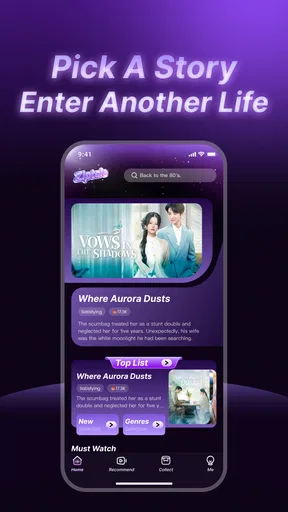
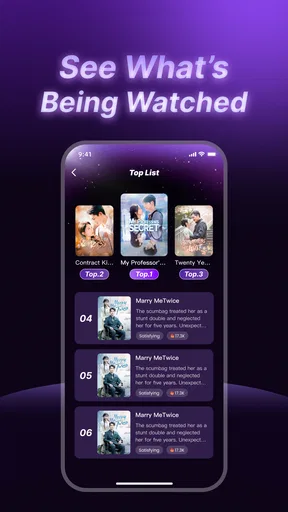
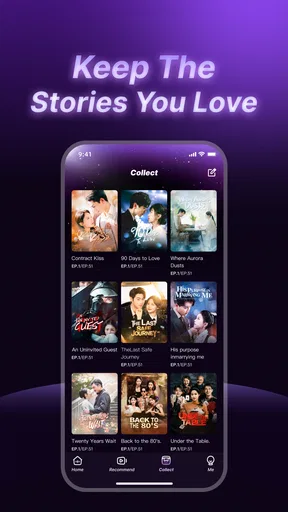

 Analysis by AppCompare
I approached Ziptale as a quick-entertainment app rather than a full replacement for a conventional streaming service. Its focus is short dramas arranged around categories and rankings, which makes the idea easy to understand: open the app, browse what is attracting attention, and start watching without committing to a long film or a full television episode. In my experience, that format is most appealing when I have a few spare minutes and want a story with more structure than a random social video.
The app comes from Healthy Life Tools and sits in the entertainment category. It is free to install, has an Everyone age rating, and supports devices running Android 5.0 or later. That broad technical reach is useful for people using older phones, although the viewing experience will still depend heavily on the screen, speakers, storage, and connection available on a particular device. The current version is 1.1.2, so I see it as a relatively early product whose direction is still worth watching rather than as a finished, mature streaming platform.
How Ziptale feels in everyday use
The central appeal is the combination of short-form viewing and organized discovery. Instead of searching through an enormous general catalog, I can use categories and rankings as a starting point. That matters because short dramas often work best when the decision to watch is almost effortless. A ranked list can answer the immediate question, “What should I try next?” while categories help narrow the mood.
I would use it during a commute, while waiting for an appointment, or at the end of the day when I want a contained piece of entertainment. It is also a reasonable option for someone who enjoys dramatic storytelling but does not want to begin a two-hour movie. The format encourages sampling: watch part of a title, decide whether its tone works for you, and move on without feeling that you have wasted an evening.
That convenience has a trade-off. Short dramas are built around quick hooks, so viewers who prefer slow character development, detailed world-building, or carefully paced cinema may find the experience too compressed. Ziptale is better suited to bursts of attention than to a planned movie night. I would not choose it first for someone looking for prestige television, a large back catalog, or a service organized around familiar mainstream releases.
Discovery is the real product experience
With an app like this, the browsing system matters almost as much as the videos. Categories are useful when I know the kind of emotional experience I want, while rankings are useful when I want social proof or simply need a fast recommendation. My practical advice is to treat rankings as a launchpad, not as a guarantee. A popular title may be a good fit for one mood and completely wrong for another.
A more effective routine is to begin with a category, sample a few different titles, and notice which presentation style keeps your attention. Once you find a suitable direction, rankings can help you explore within that area instead of repeatedly opening the overall list. This small change reduces aimless scrolling and makes the app feel more intentional.
Worth Reading Before You Choose

Flipboard Shows What News Apps Must Do Beyond the Feed

Switching to Android Auto Means Rethinking Your Driving Routine

Google Calendar Makes a Crowded Week Easier to Manage

Ludo King Makes the Most of the Minutes Between Plans

Baby Panda World Brings Quick Play to Modern Phones, but Its Game Library Feels Busy

ESPN’s Live Game View Makes Following Close Games Easier
Another useful habit is to decide in advance how long you want to watch. Short-form entertainment can quietly turn a five-minute break into a much longer session because each new episode or title appears easy to start. That is not a flaw unique to this app, but the compact format makes it especially easy to keep going. I find Ziptale works best when I use it as a deliberate break rather than as background content that runs indefinitely.
Where it differs from ordinary video apps
Compared with a general video platform, Ziptale has a narrower purpose. A general platform gives me music, creators, tutorials, live content, news, and long videos alongside dramas. That variety is convenient, but it also creates more noise. Ziptale’s category-and-ranking approach is more focused, so it can be preferable when I already know that I want dramatic short-form fiction.
Compared with a traditional streaming service, the advantage is immediacy. I do not need to reserve a large block of time for a film or a long episode. The disadvantage is breadth and depth: a traditional service is usually better for established franchises, extensive browsing tools, profiles, and a polished long-form viewing routine. If my priority is a dependable library for family movie nights, I would choose the traditional option instead.
Compared with short-video feeds, Ziptale should appeal to viewers who want a story rather than an endless sequence of unrelated clips. The ranking and category structure can provide more direction than a purely algorithmic feed. Still, anyone who values precise control over recommendations, detailed playback tools, or a broad mix of content should compare the experience carefully before making it their main entertainment app.
What the current release tells me
The present version, 1.1.2, is the clearest sign that the product is still developing. I would interpret that version number as evidence of an active early-stage release, not as proof of a particular feature roadmap. It suggests that existing users should keep the app updated and pay attention to how browsing, catalog organization, and viewing behavior evolve over time.
The release date is May 6, 2026, which places the app in a very recent phase of its life. That context changes how I judge it. I am more forgiving of a smaller catalog or rough edges in a new entertainment app than I would be with a long-established streaming service, but I also expect the basics to become smoother as the product matures. Early users are effectively helping establish whether the concept can become a dependable destination rather than remaining a simple experiment.
For someone installing today, the practical expectation should be modest: this is a focused short-drama viewer, not an all-purpose media center. The current release may be interesting precisely because the product has room to develop, but that also means people who dislike change or need a deeply polished interface may prefer to wait and see how future updates settle.
The effect on people already using it
Existing users should find the version information useful when troubleshooting. If the app behaves differently after an update, checking that the device is running the current release is a sensible first step. On older Android hardware, I would also keep enough free storage available for normal app operation and avoid judging the service from a weak connection alone. Video playback is sensitive to conditions outside the app itself, so a poor session does not automatically mean the catalog or interface is at fault.
The free entry point lowers the barrier to trying it, but free does not necessarily mean every part of the experience is free. In-app purchases range from $4.99 to $299.99 per item, a very wide span that deserves attention before making any payment. I would read each purchase screen carefully, confirm what the item unlocks, and avoid assuming that a single payment covers the entire service. This is particularly important for casual viewers who only want to sample a few dramas.
My strongest advice for current users is to establish a personal spending limit before browsing deeply. The app is designed around quick decisions, and quick decisions are exactly when it is easiest to approve a purchase without considering the total cost. If you are happy using only the free portion, keep that boundary clear. If you decide to pay, do so because a specific title or access option is worth it to you, not because a ranking makes the purchase feel urgent.
The public response also deserves a realistic reading. Ziptale has over 50 thousand installs, but its average rating is only 1.1 from 89 ratings, with 22 written reviews. That combination does not tell me exactly why individual users were dissatisfied, and I would not treat it as a complete technical diagnosis. It does tell me to approach the app carefully, test the core viewing experience on my own device, and avoid assuming that popularity alone equals reliability.
Remaining gaps that affect the decision
The biggest concern is confidence. A very low average rating creates uncertainty around the everyday experience, especially for an app whose main purpose is straightforward: help people discover and watch short dramas. Before recommending it strongly, I would want to see consistent evidence that browsing is stable, playback is dependable, and purchase expectations are clear.
There is also a mismatch between the simplicity of the concept and the possible financial range. A viewer may arrive expecting a lightweight free entertainment app, then encounter paid items with prices reaching $299.99. That does not automatically make the app poor value, because the meaning of each item can differ, but it does make careful reading essential. For me, unclear value is a larger issue than the existence of purchases themselves.
The app may also be a weak choice for households with very different viewing needs. The Everyone rating makes it broadly accessible from an age-classification perspective, but that does not mean every drama will suit every family member’s taste. I would still preview titles and use personal judgment, particularly when children are using a shared device. An age label is not a substitute for deciding whether a specific storyline is appropriate for your household.
Another limitation is the narrowness that makes the app attractive. If I want documentaries, sports, music, user-created comedy, or long-form cinema, I will need another service. Ziptale can complement a broader entertainment setup, but I would not build my entire viewing routine around it unless short dramas are specifically what I watch most often.
Who should try it, and who should skip it
I would recommend trying Ziptale to someone who enjoys dramatic stories in compact sessions and likes having categories or rankings guide the next choice. It is especially suitable for people who often watch on breaks, want something more narrative than a random clip, and are comfortable exploring a newer app while it develops.
I would be more cautious with viewers who expect a large, established catalog, advanced streaming-service conveniences, or a predictable all-you-can-watch model. The low average rating means I would not install it as the only entertainment option before testing it. People who are uncomfortable with in-app purchases should also approach slowly and avoid tapping through payment prompts without understanding the exact offer.
For a realistic evening scenario, imagine finishing dinner with fifteen minutes before bed. A full movie is impractical, and a general video feed may leave you scrolling without finding anything satisfying. Ziptale’s categories can get you closer to a short dramatic story quickly. I would choose one category, pick a title that matches my mood, and stop after the planned viewing window. That is where the app’s design makes sense: it turns a small amount of free time into a focused story break.
What I would watch as the app develops
Future updates should be judged by whether they improve the core journey rather than simply adding more surface options. I would look for smoother movement from category browsing to playback, clearer separation between free viewing and paid items, and a catalog experience that makes it easier to understand what I am about to watch. Those are the areas most likely to affect trust and repeat use.
I would also watch how the product responds to its current reception. The install count shows that people are finding it, while the low average rating signals that discovery alone is not enough. The important question is whether later releases make the experience more dependable for new users and more satisfying for people who already invested time in it.
Because the app is from Healthy Life Tools and is still at an early version stage, I would avoid making firm predictions about its long-term direction. The current evidence supports cautious experimentation, not an unconditional recommendation. Install it if the short-drama format genuinely fits your habits, test the free experience first, and keep purchases deliberate.
My final view is that Ziptale has a clear use case but not yet enough evidence for me to call it a must-have entertainment app. I like the idea of category-led discovery for short dramas, and I can see it fitting neatly into spare moments that are too short for conventional streaming. At the same time, the very low average rating and broad in-app purchase range make a careful trial essential. The sensible approach is to explore first, spend slowly, and judge the app by how well it fits your actual viewing routine.
Pros
- Clean interface makes browsing movies and dramas simple.
- Useful categories help users discover content by genre and mood.
- Titles load quickly on a stable internet connection.
- Regular content updates can keep the catalog feeling fresh.
- Works well for short viewing sessions on mobile devices.
Cons
- Availability of titles may vary by country or region.
- Some content may require registration before it can be watched.
- Video quality depends heavily on your connection speed.
- The app may show frequent advertisements during browsing or playback.
- Subtitles and language options may be limited for certain titles.
FAQs for Ziptale -Movies & Dramas
What is Ziptale - Movies & Dramas?
Ziptale - Movies & Dramas is an entertainment app focused on helping users discover and watch movie and drama content in one place. Its catalog, playback options, and availability may vary depending on your country, device, and current licensing agreements. Before downloading, check the app’s description, supported regions, and the latest user reviews to confirm that its content matches your viewing preferences.
Is Ziptale - Movies & Dramas free to download and use?
The application may be available to download at no initial cost, but that does not necessarily mean every feature or title is free. Some content could require in-app purchases, a subscription, registration, or advertising support. Review the pricing information shown on the official Google Play Store or Apple App Store listing before signing up, especially if the app offers trials that automatically renew.
Can I watch movies and dramas offline with Ziptale?
Offline viewing depends on whether Ziptale provides downloads for specific titles and whether that feature is supported on your device and account. If downloads are available, they may have expiration dates, storage requirements, or restrictions that prevent sharing files outside the app. Check each title’s playback options and the app’s help or account settings before relying on it for travel or limited-connectivity use.
Is Ziptale - Movies & Dramas available on Android and iPhone?
Availability can differ between Android and iOS, and the app may also be limited to particular countries or device versions. The safest approach is to search for Ziptale - Movies & Dramas directly in the official Google Play Store or Apple App Store and verify the developer name, compatibility requirements, and recent update date. Avoid downloading modified versions from unofficial websites.
Does Ziptale offer subtitles, multiple languages, or parental controls?
Language and family features are important to check before installing, but they can vary by title, region, and app version. Some movies or dramas may include subtitles or alternate audio, while others may not. Parental controls may also be limited or unavailable. Open the app’s current store listing and settings information to confirm supported languages, content ratings, and account restrictions.


